
Marlow Studio was approved 12 months ago so what’s happened since then?
Not much.
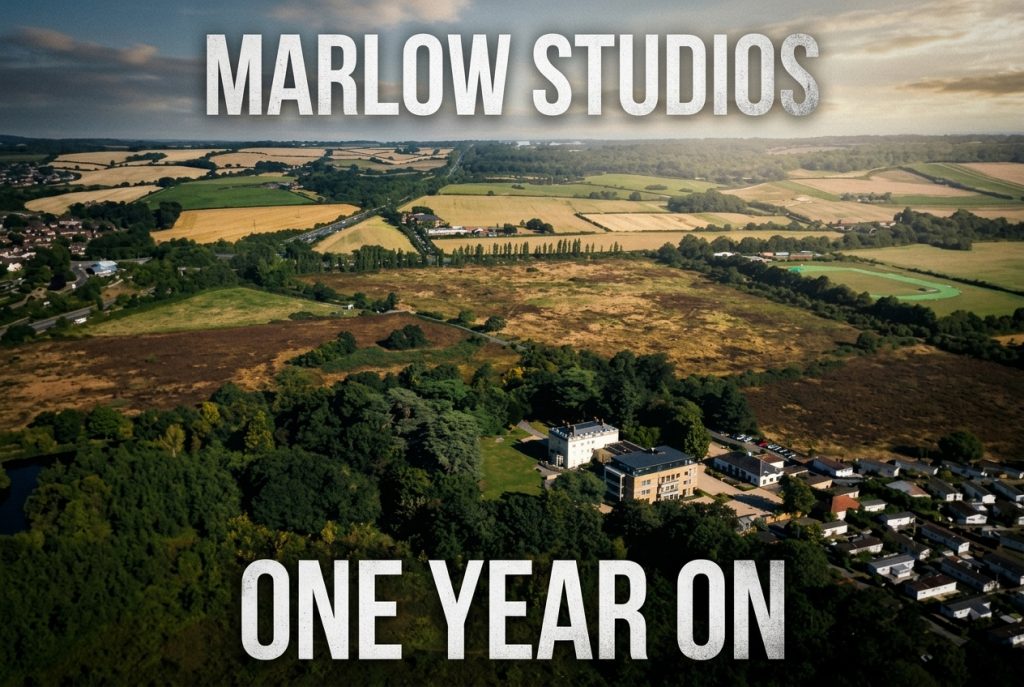
Construction hasn’t started. Admittedly they had to wait for approval of the new Volvo bridge before groundworks could begin but we’ve seen no sign of any activity whatsoever – no surveying, no detailed designs, no planning amendments, no anything.
But hold on, they purchased the Marlow International Building as an HQ for ‘inbound productions requiring office and pre-production space’. Is it now full of Hollywood bigshots planning their next major blockbuster? Not really – its occupants include a pharma company, a crypto outfit and a logistics firm. No, we don’t get it either.
However, the big news is that the four Dido founders are no longer running the show. This came as a bit of a shock given their repeated assurances that they were in it for the long-term. Robert Laycock, the former CEO and film fanatic, had been passionate about his dream of saving the British film industry by building a world-class studio that would attract new business, train the next generation of filmmakers and create thousands of jobs. So what changed? Maybe they grew tired of the project or maybe their backers grew tired of them – who knows.
They’ve been replaced by Sir John Armitt, who delivered the London Olympics, and Max James, a former head of real estate at HSBC. Out go the wannabe moguls and in comes a banker and a builder. These big hitters will no doubt be more credible in front of potential investors but they’ll have their work cut out raising £1bn in the current economic climate.
Investors in a speculative project like Marlow Studios are likely to demand an annual return of at least 15%. On a £1bn build, that’s £150m a year — more than the earnings of Pinewood and Shepperton combined. It’s a big hurdle even if Marlow manages to sign up a long-term anchor tenant and there’s little hope of that with the film and TV production industry continuing to face strong headwinds.
UK spending fell by more than 20% over the last 12 months and fewer big budget productions are now being made here. Sure, the earnings of streamers such as Netflix are increasing but they’re spending less on the kind of productions that use UK studio space. What’s more, all the major producers either own their own UK facilities or have long leases at established studios so there’s little demand for extra capacity. It’s clear that the boom times upon which the Marlow Studios business plan was based are long gone.
So where does that leave us? If they go ahead with the film studio then it’s likely they’ll scale it back and phase the development over many years in the hope it will be seen as a more viable investment opportunity. Alternatively, they could apply for a change of use and build a datacentre there instead (although that sector is now also showing signs of stress). Either way, it seems highly unlikely that Marlow will ever become the promised “Hollywood on Thames”.